Are you tired of spending money every month on disposable tampons and pads? Or do you suffer from irritation, itching, and discomfort during your period? You are not alone. More and more women are looking for healthier, more sustainable, and more comfortable alternatives. The world of menstrual products has changed enormously in recent years, and thankfully so. There is so much more than just the well-known disposable products from the supermarket.
In this blog, we objectively and honestly compare all alternatives so you can make the best choice for your body, your wallet, and the planet.
Why are women seeking alternatives?
Traditional disposable products have been the standard for decades — but they come with a number of disadvantages that are increasingly making women reconsider:
•Irritation and health: many disposable products contain plastic, perfume, and bleaching agents that can cause irritation or allergic reactions.
•Environmental impact: a woman uses an average of 10,000 to 12,000 disposable products in her lifetime — creating a massive amount of waste that takes hundreds of years to decompose.
•Cost: monthly purchases add up. In the long run, reusable alternatives are much cheaper.
•Comfort: plastic and synthetic materials can feel stuffy and lead to a less pleasant experience.
1. Reusable pads: soft, healthy, and sustainable (the LottePads favorite)
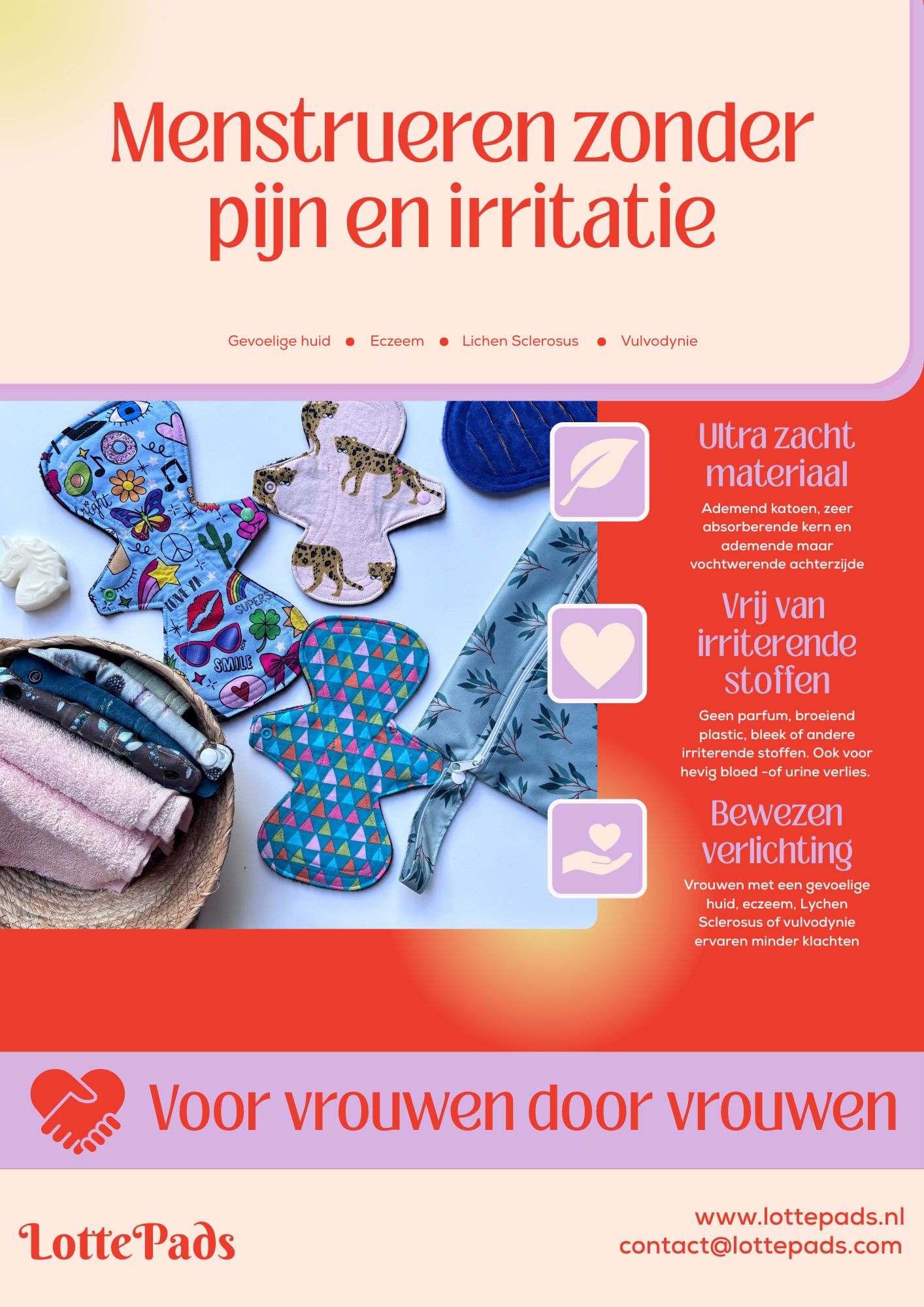
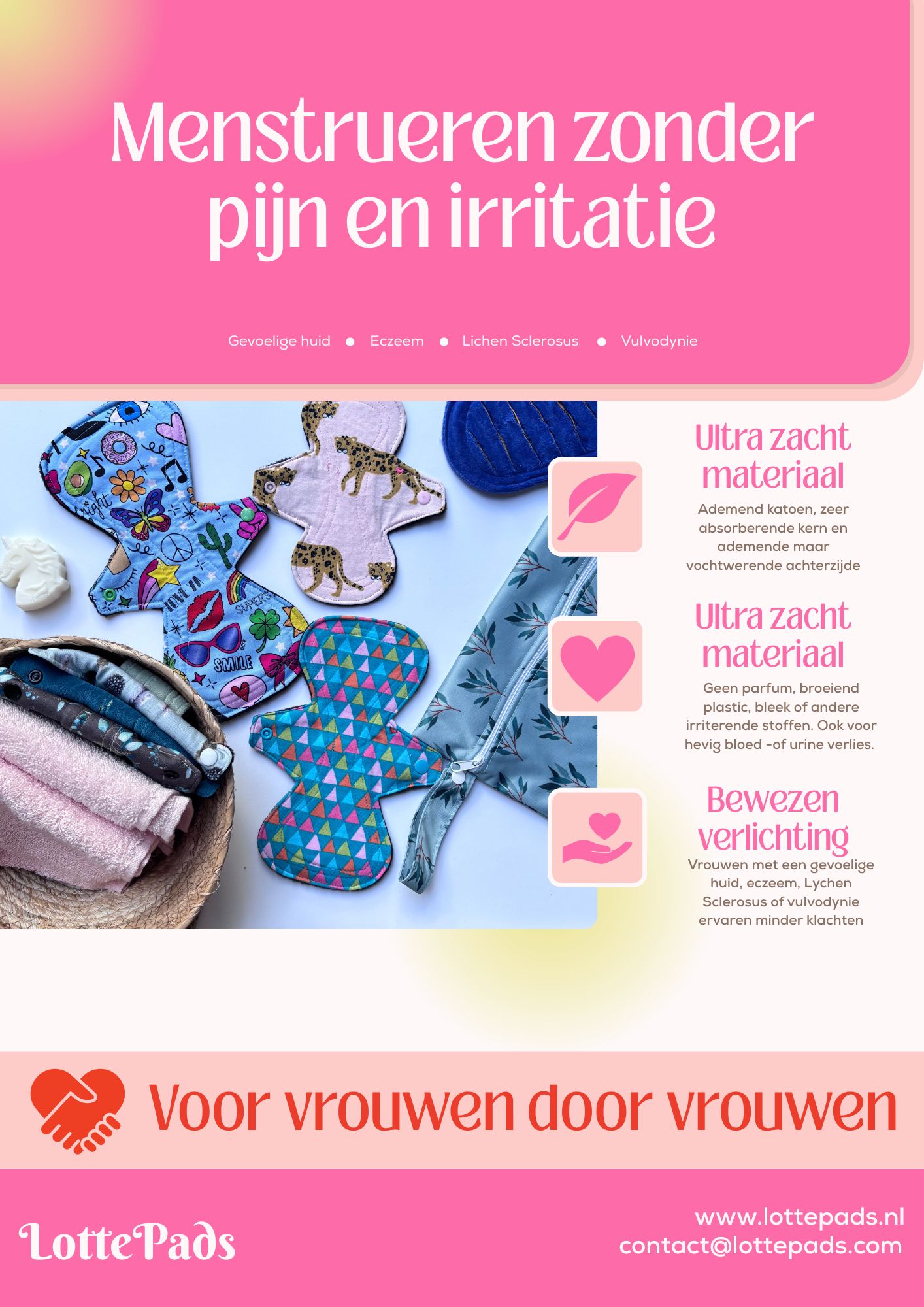
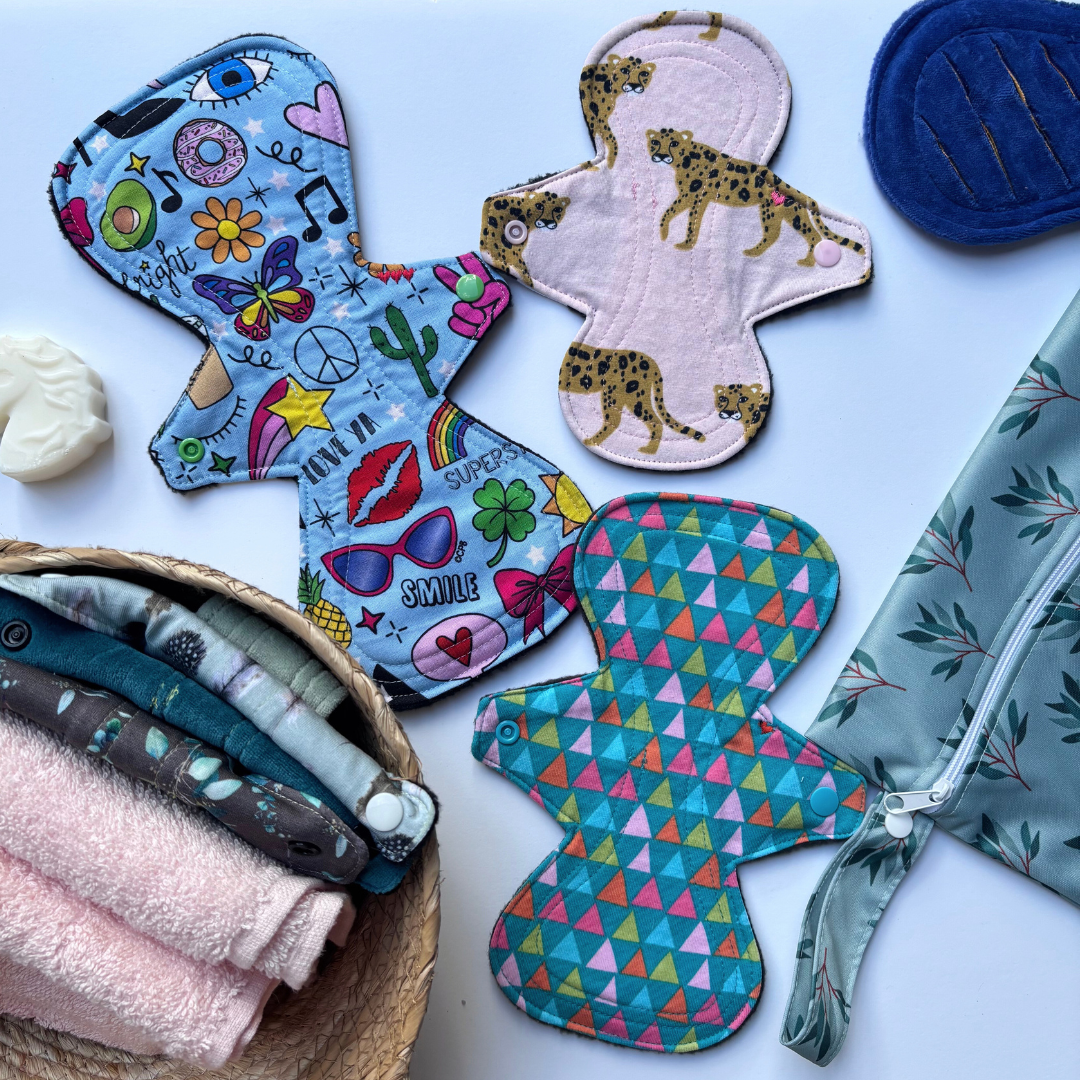
Reusable pads, like those from LottePads, are made from soft, breathable fabrics such as cotton, bamboo, or eucalyptus. They have an absorbent core and a waterproof layer, and are attached to your underwear with snap fasteners. After use, rinse them with cold water and wash them in the washing machine. Check out our reusable pads and find out which size is right for you.
Advantages:
•Ultimate comfort: feels soft, breathes well, and prevents irritation and stuffiness.
•Healthy for your body: free from chemicals, perfume, and bleaching agents. Ideal for sensitive skin.
•Environmentally friendly: lasts 5 to 10 years, drastically reducing waste.
•Cost-saving: a one-time investment that quickly pays for itself.
Disadvantages:
•Washing: requires an extra wash. Cold rinsing is necessary to prevent stains.
•On the go: you need to carry used pads in a wet bag.
2. Menstrual cups: freedom and capacity
A menstrual cup is a flexible cup made of medical-grade silicone that you insert into the vagina to collect menstrual blood. It does not absorb, but collects.
Advantages:
•Long wearing time: can stay in for up to 12 hours. Ideal for long days or nights.
•High capacity: collects more than tampons or pads, perfect for heavy flow days.
•Durable and inexpensive: lasts up to 10 years.
Disadvantages:
•Learning curve: inserting and removing it requires practice and can feel unfamiliar at first.
•On the go: emptying and rinsing in public restrooms can be a challenge.
•Not for everyone: some women find it uncomfortable or have medical reasons (such as an IUD) that make it less suitable.
3. Menstrual underwear: ultimate convenience and discretion
Menstrual underwear looks like normal underwear but has a built-in absorbent layer. You simply wear it like panties — no hassle with inserting or attaching.
Advantages:
•Simple: put them on and you're done. Feels like normal underwear.
•Discreet and comfortable: no one knows you're wearing protection, soft and breathable.
•Good backup: ideal as extra protection with a cup or for light flow days.
Disadvantages:
•Price: often more expensive per piece than reusable pads.
•Changing on the go: you have to change your entire underwear, which is less practical.
4. Menstrual discs: the newcomer with advantages
A menstrual disc is a flat, flexible disk that you insert deeper into the vagina, behind the pubic bone. It collects blood, just like a cup — but without vacuum.
Advantages:
•High capacity: can collect a lot of blood, often more than a cup.
•Suitable with an IUD: does not create a vacuum, which some women prefer.
Disadvantages:
•Messy when removing: especially at the beginning.
•Fit: the one-size-fits-most approach doesn't work for everyone.
5. Organic disposable sanitary pads and tampons: the better disposable
Made from 100% organic cotton, without chlorine, plastic or synthetic materials. A healthier alternative to traditional disposable products — but still disposable.
Advantages:
•Healthier: no chemicals near your mucous membranes, less chance of irritation.
•Convenience: the same convenience as regular disposable, ideal for travel or as a backup.
Disadvantages:
•Still waste: single-use, so contributes to the waste mountain.
•Cost: more expensive than regular disposable and in the long run more expensive than reusable options.
Making the switch: your guiding thread to comfort
Choosing an alternative is very personal. For many women, washable sanitary pads are the ideal first step — accessible, comfortable, and you don't have to insert anything. At LottePads, we believe in comfort, health, and sustainability. Our washable sanitary pads are designed to make your period as pleasant as possible, without irritation or hassle. And no, it's not gross — with a good wet bag and a cold rinse cycle, washing is as easy as your underwear.
Ready to make the switch? Discover our range of washable sanitary pads and experience the difference for yourself.