
All About Reusable Menstrual Pads
You've probably heard about them already. On this page, we explain everything about reusable menstrual pads — from materials and usage to washing and making the switch from disposable products.
After reading, you'll know exactly whether reusable menstrual pads are right for you, which variant suits you best, and how to get started.
What Are Reusable Menstrual Pads?
Reusable menstrual pads work the same as disposable pads — you wear them in your underwear, they absorb your flow, and you change them when needed.
The big difference: instead of throwing them away, you wash them and use them again.
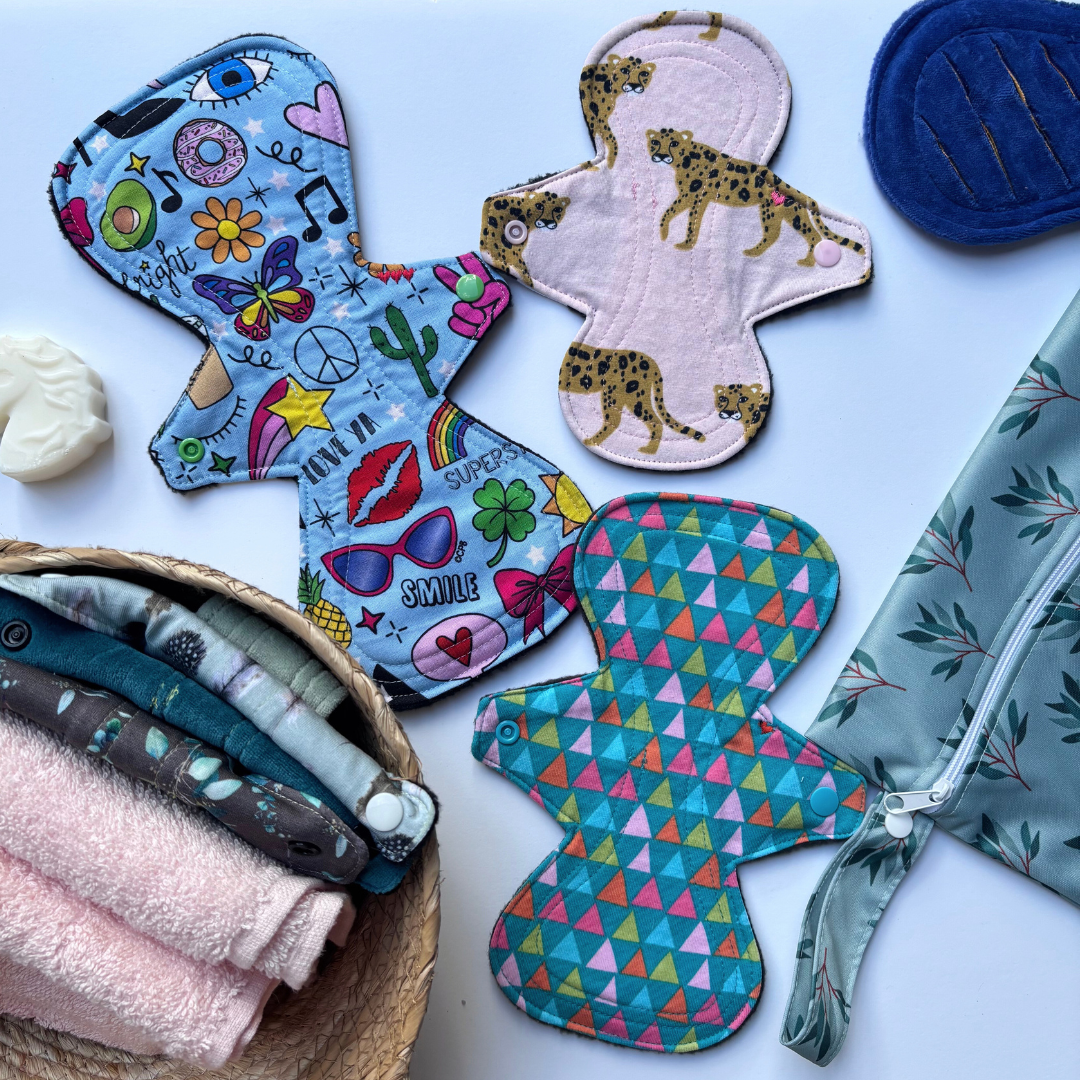
LottePads are secured with snaps under your underwear. They stay firmly in place, move with your body, and stay put — even when you exercise, bike, or have a busy day.
How Are They Made?
Each LottePads pad consists of three layers, each with its own function.
The Top Layer
What touches your skin — choose what feels best
| Top Layer | Feel | Suitable For |
|---|---|---|
| Woven Cotton | Firm, smooth | People who prefer a tight, firm fabric |
| Tricot Cotton | Soft, stretchy | Daily use, comfortable for sensitive skin |
| Cotton Velour | Velvety soft, dry feel | Sensitive skin, chronic skin conditions, incontinence |
| Organic Cotton | Soft, eco-friendly | People who consciously choose organically grown materials |
Certified Quality
All fabrics are OEKO-TEX or GOTS certified — free from harmful substances, tested for skin safety.
The Core
The heart of the pad — the absorbent layer
We use molton cotton, a heavy woven cotton fabric where each layer absorbs 16 times its own weight in moisture.
SuperFlow — for clots
3 layers molton cotton + 3 layers tricot, with special notches for faster absorption of clots. Ideal for very heavy flow.
The Back Layer
The protective layer — anti-pill microfleece
This fabric stops moisture but breathes maximally. That sounds like a contradiction, but it works:
- Moisture does not pass through
- Air does — maximum breathability
This makes a big difference for people who suffer from stuffiness, skin irritation or chronic yeast infections from using disposable pads.

"Blood from your uterus is not dirty. It comes from a clean place. It's just blood."
How to Use Reusable Menstrual Pads?
How long can you wear them?
We recommend changing the pad every 4 to 6 hours, just like with disposable pads.
On heavy days you may want to change more often; on light days you can go longer. Listen to your body.
What do you do with a used pad on the go?
You don't need to rinse it immediately. Put the used pad in a wet bag or pad wrapper.
Reusable pads have hardly any odor, certainly not the chemical smell you know from disposable products. So you can simply keep them in your bag until you get home.
How to Wash Reusable Menstrual Pads?
Good washing is the key to a long life for your pads
Cold Pre-soak
Rinse the pads cold before putting them in the washing machine. This can be done in three ways: cold pre-rinse cycle, a bucket of cold water, or a quick rinse under the cold tap. Cold water is important — hot water sets blood stains.
Washing
Wash the pads at 40 to 60 degrees in the washing machine. Do not use fabric softener — fabric softener damages the absorbency of the core.
Drying
You can put the pads in the dryer, but they absorb more moisture if you line dry them. The core fibers relax better in the air. Line drying is the better choice for optimal performance.
What if there's still a stain?
Not every pad comes out of the wash stain-free. What remains is usually dye that has set into the fabric — not dirt, not bacteria. Hygiene is guaranteed.
How Long Do They Last?
With daily use, LottePads last an average of 3 years. With normal use (only during your period) they last 5 years or more.
Do the math:
- Average 5 pads per day
- Average 5 days per period
- That's 25 disposable pads per cycle
- Times 12 months = 300 disposable pads per year
Over 37.5 years = more than 11,000 disposable pads per person.
Are Reusable Menstrual Pads Hygienic?
This is the question we get most often
Yes, absolutely — as long as you follow the washing instructions.
Reusable pads smell different from disposable pads. Actually, they barely smell at all. This is probably because there's no chemical reaction between blood, sweat and the synthetic materials found in disposable products.
Your washing machine is designed to wash. Blood, sweat, urine — a machine at 40 to 60 degrees cleans it all. There's no reason to treat reusable pads differently from other clothing that comes into contact with your body.
Maybe even more hygienic
In a way, reusable pads may even be more hygienic than disposables — because you know exactly what's in them, and no chemicals are involved.
Isn't It Hot or Stuffy?
No — and that's exactly the opposite of what many people expect.
The top layer of LottePads breathes and absorbs moisture. Moisture is wick away from your skin, not trapped.
People who suffer from stuffiness, skin irritation or yeast infections from disposable pads often notice a difference quickly after switching.
How Many Do You Need?
That depends on your period. Look at your own cycle:
How many days do you menstruate?
How heavy is your flow on the heaviest day?
As a rule of thumb: you need an average of 4 to 5 pads per day, plus 1 for the night. For a 5-day period, that comes to 20 to 30 pads for a full set.
Don't want to buy a full set right away?
Start with a smaller amount and expand. Or start with pantyliners — a low-threshold way to experience how reusable products feel.
How to Start Making the Switch?
If you're nervous, start with pantyliners. They're smaller, easier to wash, and you can wear them on days when you're not menstruating. This way you get used to the concept before taking the step toward pads.
"When you start, you'll wonder why you didn't start sooner."
Frequently Asked Questions
Don't reusable pads smell?
Barely. Reusable pads don't have the chemical smell you know from disposables. This is because there are no synthetic materials reacting with blood or sweat. The fabric breathes, and that helps.
Do they get clean?
Yes. Pre-rinse cold, wash at 40 to 60 degrees without fabric softener. Your washing machine does the rest. A light stain that remains is dye, not dirt.
Do they stay in place?
Yes. The snaps hold the pad firmly in place. The shape of the pad is designed to move with your body.
Can I wear them at night?
Yes. All variants are suitable for nighttime use. For heavy nights, we recommend Heavy/Night (31 cm) or Heavy+ (47 cm) due to the extra length.