You probably know them: those white or orange marks in your dark underwear. We understand the frustration when yet another nice pair of knickers seems ruined by a pale patch in the middle. You're not alone! This happens to a lot of women. These bleach spots in your underwear are completely normal, but nobody told me this could happen when I was younger! Was that the same for you?
Where do these bleach spots come from?
Every woman loses different kinds of discharge throughout her cycle. Your discharge tells you a lot — it is a real health check. STIs and bacterial or yeast infections often show up through the consistency, smell and colour of your discharge. Your discharge also reveals exactly which phase of your cycle you're in.
"Learning to read your own discharge takes away a lot of period stress."
Lotte Bink-Voskes
Let's start with phase 1, menstruation. As you can guess, your discharge is bright red to dark brown. This is the most recognisable phase, and we almost treat our period as separate from our cycle. It's an event in itself. But in fact you are losing discharge: it contains a percentage of (old) blood, mucous membrane and discharge.
- Phase 1: menstruation
- Phase 2: follicular phase, before ovulation
- Phase 3: ovulation, lots of thin, watery, clear discharge
- Phase 4: luteal phase, thicker, sticky, whitish-yellow discharge
💡 Save your favourite knickers!
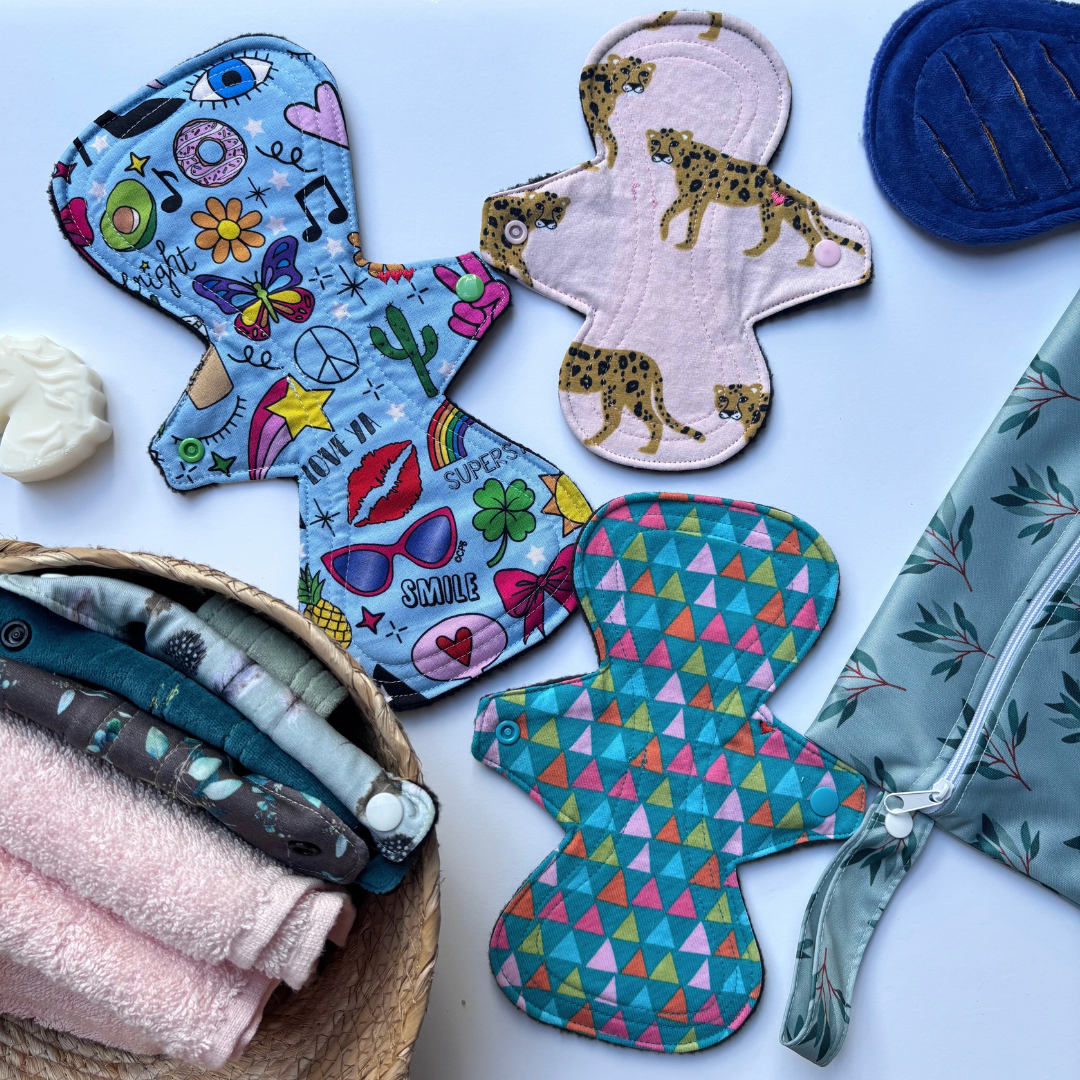
Bleach spots are normal, but annoying in your nice underwear. Use washable panty liners to catch your discharge before it reaches your knickers — so your favourite pairs stay nice!
So how do bleach spots in underwear form?
Bleach spots in underwear come from the acidity of our discharge. A healthy pH is somewhere between 3.8 and 4.5. This acidity helps prevent infections. When it gets out of balance, it can trigger yeast infections or vaginitis, for example.
What is pH?
pH is a value that indicates acidity. It runs from 0 to 14, with 7 being exactly neutral. A healthy vagina is slightly more acidic than the rest of your body: a healthy vaginal pH is between 3.8 and 4.5. This has to do with the bacteria and the self-cleaning ability of the vagina, because harmful bacteria don't survive well in an acidic environment. When this balance is off, problems such as bacterial infections or yeast infections can develop.
pH fluctuations can be caused by many external factors. Medication, menstruation, synthetic underwear, tampons and (disposable) pads, eating lots of sugar, stress, sex, semen, lubricant and (vaginal) soap can all disturb this balance. That's quite a list! You can also have an oestrogen imbalance, in which case the problem goes a bit deeper.

Recommended
Washable panty liners
Catch discharge with a soft, breathable panty liner. From mini to maxi and thong, handmade in the Netherlands.
From €11.99
Chronic yeast infections often have a deeper cause
If you keep getting yeast infections, look a bit further than the issues above. Several customers have told me their yeast infections disappeared once they started using cotton panty liners and washable pads. The top layer of reusable products is often made of cotton, which doesn't trap heat and lets sensitive skin breathe. Vaginal discharge then becomes more balanced, which usually reduces the complaints a lot.
✨ Save your nice knickers with washable panty liners
Bleach spots are normal, but annoying in your nice underwear. That's why washable panty liners are the perfect solution:
- ✓ Catch discharge before it reaches your knickers
- ✓ Cotton top layer — lets your skin breathe (no sweaty feeling!)
- ✓ Helps maintain your pH balance
- ✓ Helps prevent yeast infections through better airflow
Are bleach spots in underwear and yeast infections related?
The yellow, orange or brown marks in your underwear have little to do with yeast infections or other problems. Your vagina is self-cleaning, so if you naturally have a slightly higher acidity, or your vagina has fought off an infection, these bleach spots can appear. The annoying thing is that you often only see them once the discharge has come into contact with detergent.
Can you do anything about it?
Not really. If you get bleach spots in your underwear, you'll probably get them in your washable panty liners too. The advantage is that panty liners are everyday items and you've saved your nice knickers from the marks. I also believe acidity changes with each phase of the cycle. It fights bacteria and threatening infections, so it really has a function. It's all about the right acidity.
What not to do
- Don't wash your vagina with soap, not even soap that is "meant for it according to the packaging".
- Don't use perfumed wipes to "freshen up".
- Don't douche with tap water — your vagina is self-cleaning.
What to do
- See your GP if you have serious complaints.
- Wear underwear made of cotton or another natural fibre such as bamboo or hemp.
- Wear cotton panty liners.
"Sex and semen can change your pH balance"
Smells
Your vagina simply has a certain smell. Some smells only you notice — especially around your period, when your senses, and your sense of smell in particular, are much sharper. A strong rotten-fish smell can point to a pH imbalance, an infection or an STI, so always get that checked! Ever hear men joke about how a vagina smells? Remember that their semen and fluids can be the cause! Sex with a man is often the biggest reason for a pH imbalance, irritation or even infections. So they can tone it down.
Switching to cotton panty liners
Because LottePads panty liners breathe much better than disposable ones, I generally see that women have far fewer pH fluctuations, and that recurring yeast infections disappear after using washable panty liners and pads for a few weeks.
You can also get bleach spots in your cotton panty liners and washable pads, especially in black and blue/purple, which are extra sensitive. Bleach spots are annoying, but luckily a pad is an everyday item and the spots don't affect the quality of your washable pad.
🛍️ Choose the right size for your discharge
For very light discharge or as a backup during your period
Regular panty liners ⭐ Most popular!
For daily use — perfect for average discharge
For heavier discharge or extra peace of mind
🌱 New to washable?
Start with one panty liner and find out whether you like it — without a big investment
Panty liners from €11.99Handmade in the Netherlands | 30-day return period
Frequently asked questions about bleach spots
Why do I get bleach spots in my underwear?
Bleach spots come from the acidity of your vaginal discharge. A healthy pH is between 3.8 and 4.5. This acidity protects you against infections, but it can bleach your underwear — especially dark colours.
Are bleach spots normal?
Yes, absolutely! Bleach spots are a sign that your vagina is healthy and self-cleaning. They mean your pH balance is doing its job of preventing infections. Only if they come with a strong fishy smell, itching or pain should you see a doctor.
How do I prevent bleach spots in my nice knickers?
You can't really prevent bleach spots (they're a healthy sign!), but you can protect your nice knickers with washable panty liners. They catch your discharge before it reaches your underwear.
Do washable panty liners help against yeast infections?
Many women notice that yeast infections decrease or disappear after switching to washable. Cotton panty liners breathe much better than disposables (which often contain plastic), so there's less trapped heat and your pH balance stays more stable.
Will I also get bleach spots in washable panty liners?
Yes, that can happen — especially in dark colours like black or purple. But that's exactly the point! Better bleach spots in your panty liners (which are made for it) than in your nice underwear. And it doesn't affect the quality or performance of your washable products.
Which panty liner size do I need?
That depends on your discharge: Mini for very light, Regular for daily use (most popular), or Maxi for heavier discharge. Not sure? Start with one panty liner and see what you like.
🧺 New to washable? Read our complete washing instructions to keep your products looking good for years!